

Wisconsin hospitals face both rising strain and financial risk
Hospital Sisters Health System (HSHS) closed Sacred Heart Hospital in Eau Claire and St. Joseph’s Hospital in Chippewa Falls in 2024. Labor and delivery units have shuttered in multiple rural counties, and inpatient behavioral health capacity continues to shrink


Wisconsin residents are feeling the strain of a hospital system under pressure. Emergency rooms are crowded, rural hospitals are cutting services, and unpaid medical bills are piling up. Rising costs, staffing shortages, and reliance on public insurance are leaving communities vulnerable, even as hospitals work to maintain high-quality care. New 2025 data released by the Wisconsin Hospital Association show many facilities operating on razor-thin margins and providing growing amounts of uncompensated care, signaling heightened risk for patients and providers alike.
Financial stability is eroding
Hospitals closed 2024 with modest overall improvement, but the recovery was uneven. According to the Wisconsin Hospital Association, nearly one in four hospitals operated at a loss, and more than 40 reported negative operating margins. Safety-net hospitals remain under acute pressure, as Medicaid reimbursements continue to fall short of actual costs, according to analyses shared by hospital finance leaders.
Uncompensated care reached $1.77 billion in 2024, a 30.5 percent increase from the previous year, as reported by the Wisconsin Hospital Association. High-deductible plans, widespread underinsurance, and reliance on emergency departments for primary care have accelerated financial strain. State-level hospital data show emergency department visits now exceed 2.4 million annually. Hospital administrators report that facilities collect roughly 31 cents for every dollar billed, while supply and service costs have risen more than 11 percent over the past two years.
Rural hospitals face the greatest risk
Strain is most severe in northern and western Wisconsin. Ten rural hospitals formed the Wisconsin High Value Network, serving nearly 400,000 patients. Rather than selling to larger systems, these hospitals are pooling purchasing power, sharing technology, and delaying service reductions.
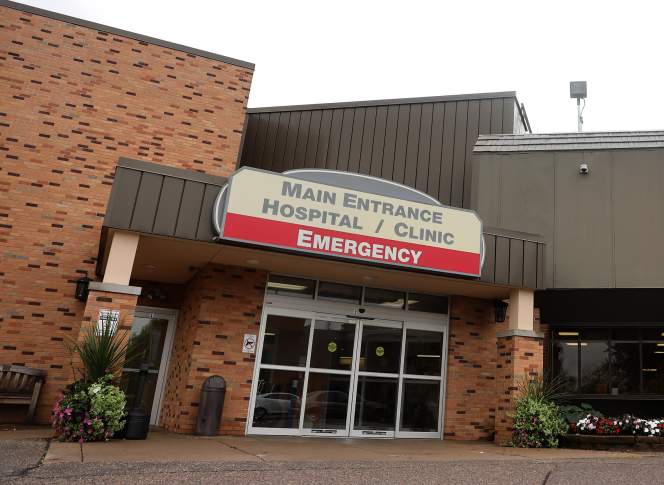
Recent closures highlight what is at stake. Hospital Sisters Health System (HSHS) closed Sacred Heart Hospital in Eau Claire and St. Joseph’s Hospital in Chippewa Falls in 2024. Labor and delivery units have shuttered in multiple rural counties, and inpatient behavioral health capacity continues to shrink. Federal health researchers, including teams working with the Federal Office of Rural Health Policy, have identified Holy Family Memorial (Manitowoc), Mayo Clinic Health System–Oakridge (Osseo), and Aspirus Stanley Hospital (Stanley) as hospitals at elevated risk of closure or major service reduction.
The loss of local obstetric services has serious consequences for rural families. Jane Crawford Peterson, BS, CPM, LM (Retired), a rural midwife for more than 40 years, said, “Providing accessible, high-quality maternity care is foundational in ensuring health outcomes for both mothers and babies. The closure of rural OB units creates significant barriers for many families, particularly those who lack reliable transportation or the means to travel long distances for care. Obstetric emergencies require timely intervention, and increasing the distance to care can have devastating consequences. I witnessed firsthand how the availability of local obstetric services saves lives, strengthens families, and provides wide-reaching positive effects for rural communities.”
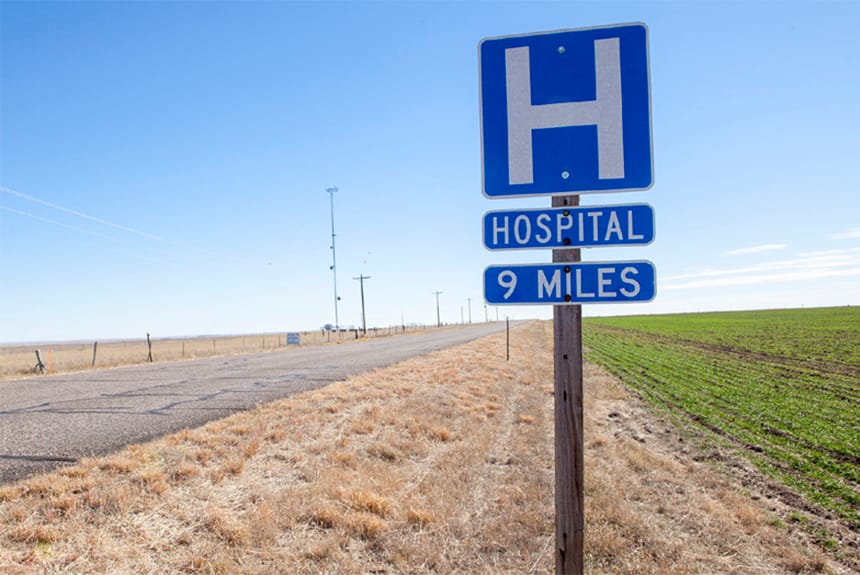
For rural residents, consequences go far beyond inconvenience. Cynthia Greening, a Chippewa Falls resident, explained, “I am severely allergic to bee stings, and if a bee stings me, I have twenty minutes, and then I am dead.” Longer emergency drives, delayed imaging and diagnostics, and slower access to time-sensitive treatment are now a daily reality.
Jon Schultz, Deputy Chief of EMS for Eau Claire Fire and Rescue, emphasized the operational impact of the Sacred Heart closure. “Sacred Heart was anywhere from 125–150 patients that we transported to every month. Losing that facility means longer drives to the next hospital, increased response times, and more pressure on our crews during emergencies,” Schultz said.
Policy changes are increasing pressure
The Affordable Care Act’s enhanced premium tax credits, which reduce monthly insurance costs, are scheduled to expire. Wisconsin insurance regulators have modeled 2026 premium increases assuming those subsidies lapse, according to reports submitted to state review panels. Policy analysts warn this is likely to raise costs and shrink coverage in the individual market.
When coverage drops, hospitals absorb the direct impact: more unpaid bills, expanded charity care, and emergency departments used as substitutes for routine outpatient care. Federal health officials project that Medicaid eligibility changes beginning in mid-2025 could result in millions of additional uninsured Americans nationwide. Wisconsin hospital financial forecasts estimate the cumulative impact on rural hospitals could approach $1.7 billion over the next decade. Congress has approved a $50 billion rural hospital stabilization fund, though hospital leaders say publicly that it will cover only a fraction of expected losses.
Public concern is rising
Public anxiety about hospital access is intensifying. A 2025 statewide poll conducted by Healthy Wisconsin Alliance found that seven in ten Wisconsin voters are concerned about hospital closures. Concern is highest in rural areas and the Eau Claire media market, where multiple hospitals and clinics closed in 2024. In that region, more than eight in ten voters reported concern about losing local hospital services.
Eric Borgerding, President and CEO of the Wisconsin Hospital Association, said, “These results show that voters are increasingly worried about access to care and the stability of their local hospitals. Communities are paying attention because these changes affect everyone — from expectant mothers to seniors relying on timely emergency care.”
The polling also highlights the financial vulnerability of nonprofit hospitals, which treat higher shares of Medicare and Medicaid patients and receive reimbursements below the true cost of care.



Quality of care remains strong
Despite financial stress, clinical performance remains high. According to Forbes hospital rankings for 2026, multiple Wisconsin hospitals received five-star overall ratings. The Leapfrog Group awarded 16 Wisconsin hospitals an “A” grade for patient safety, with no Wisconsin hospitals receiving a failing safety grade. Strong clinical outcomes now coexist with increasingly unstable financial foundations across much of the state, as documented in hospital quality reports.
Workforce challenges persist
Staffing shortages continue to strain operations. Nurse vacancies remain elevated, contract labor is costly, and burnout is widespread, according to workforce assessments shared by hospital systems.
Ascension hospitals, partnered with the Wisconsin Hospital Association Foundation, operate student development programs through HOSA, training future nurses and allied health workers before shortages deepen. Karen Phillips, Director of Workforce Development at Ascension Wisconsin, said, “Training the next generation of nurses is crucial. If we don’t invest now, access to care will shrink even further in rural communities.”
Marci Reynolds, RN, BSN, of Waupaca, added, “With the recent recommendation that many professions are no longer considered professions, the result will be a reduction in federal aid for grad school. This will affect the number of people going into Nursing, at a very critical point in the Nursing shortage. Many people go into Nursing with an eye to the future: becoming nurse practitioners, nurse anesthetists, or nursing instructors, or pursuing a master’s in public health. This will ultimately put an even greater burden on hospitals.”
Even with training programs in place, workforce projections show shortages extending into the 2030s, with direct consequences for access and continuity of care.
National context, Wisconsin relevance
A ProPublica investigation into Georgia’s Phoebe Putney Health System showed how consolidation, rising debt, and weak oversight can erode access and safety over time. Wisconsin has not experienced the same degree of monopoly concentration or documented system-wide patient harm.
But similar warning signs are visible: tightening margins, shrinking service lines, heavy dependence on public insurance, and rural hospitals carrying the heaviest burden. The relevance is not identical outcomes, but familiar financial and structural signals are appearing early in Wisconsin’s data.
What 2026 is likely to bring
Emergency department volumes are expected to rise. Insurance premiums may increase if federal subsidies lapse. Medicaid payment changes will continue to stress already fragile rural hospitals.
The most probable outcome is not widespread hospital collapse, but narrower access: fewer labor and delivery units, fewer mental health beds, fewer non-critical services, and longer wait times for the care that remains. Wisconsin’s hospitals continue to function — but with thinner margins, greater risk, and growing dependence on political decisions beyond their control. What happens next will be shaped less by hospital administrators and more by lawmakers deciding how — or whether — to stabilize the system.
Wisconsin hospitals face both rising strain and financial risk © 2025 by Jean Kiernan Detjen is licensed under CC BY-NC-ND 4.0


